
How Glue Pull Repair Complements Traditional PDR Technique
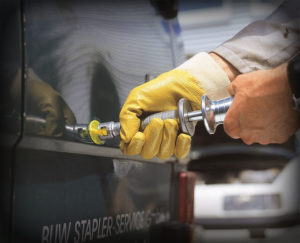
At The Ding King Training Institute, Inc., students learn that Paintless Dent Repair is not a single technique but a collection of strategies that work together to restore metal cleanly and professionally. One of the most important complementary techniques is Glue Pull Repair (GPR). While traditional PDR involves accessing the backside of the panel with rods and levers to move metal from behind, Glue Pull Repair works from the outside. Instead of pushing the dent out, the technician lifts the dent from the surface using specialized tabs, adhesives, and controlled pulling methods.
This technique is not a shortcut or substitute for internal access repair. It is a strategic advantage. Glue Pull Repair expands what is possible, especially on panels where backside access is limited, obstructed, or impractical. Modern vehicles often contain bracing, double-panel construction, high-strength steel, aluminum skins, or factory-sealed cavities that restrict tool placement. Glue Pull Repair allows the technician to address these dents effectively without removing interior parts or compromising panel integrity.
“A skilled PDR technician doesn’t ask, ‘Can I access the backside?’ They ask, ‘What is the smartest way to move this metal?’”
Why Glue Pull Repair Is Essential in Modern PDR Work
Automotive design has evolved. Access points are smaller. Panel materials are harder. Manufacturers use adhesives, insulation, and reinforcement to improve safety and acoustics. These structural improvements can make traditional access more challenging. Glue Pull Repair provides the flexibility needed to repair surface damage without forcing access or removing components unnecessarily.
Glue Pull Repair is especially effective when:
-
Backside access is limited or impossible
-
The panel design is double-layered or reinforced
-
The metal is thin and requires softer, distributed force
-
The technician needs to minimize disassembly time
This versatility makes Glue Pull Repair an indispensable part of the PDR skillset.
How Glue Pull Repair Works
The process involves attaching a pull tab to the dent surface using specialized PDR adhesive. A controlled pulling device lifts the metal outward. The technician then refines and balances the repair with blending hammers and knockdowns to create a smooth, clean finish. The key is control. The pulling force must be measured and gradual to avoid creating high spots or distortion.
Glue Pull Repair develops the technician’s ability to:
-
Read metal movement under low-tension lift
-
Control outward pull strength and direction
-
Blend and finish the surface to restore reflection clarity
-
Work without relying solely on backside leverage
This technique strengthens repair judgment and finishing finesse.
Glue Pull Repair vs. Internal Rod Repair
| Technique | Direction of Force | Best Use Cases | Advantages | Considerations |
|---|---|---|---|---|
| Internal Rod Repair | Push from behind | Standard dents with rear access | Direct metal shaping | Requires clear access path |
| Glue Pull Repair | Pull from surface | Limited access or thin panels | No disassembly required | Must control pull strength to avoid highs |
One does not replace the other. They work together to expand skill capability.
Where Glue Pull Repair Strengthens Technician Confidence
Glue Pull Repair teaches technicians to observe metal response, not force outcomes. When working from the surface, the technician must rely on reflection, knockdown control, and gradual correction. This sharpens finishing ability and improves subtle dent transition awareness — the difference between a repair that looks acceptable and a repair that looks invisible.
The eyes and hands learn to move together with detail-driven intention.
Why Glue Pull Repair Supports Business Growth
Technicians who master Glue Pull Repair complete more repairs without removing panels, door trim, headliners, or interior components. This increases repair speed and reduces labor time. For dealership accounts, body shop partnerships, mobile repairs, and hail work, this efficiency translates into stronger daily output and higher revenue potential.
Glue Pull Repair increases capability. Increased capability increases earning capacity.
Key Takeaways
Glue Pull Repair expands what is possible in PDR, especially when backside access is limited.
It works alongside internal rod repair, not in place of it, to form a complete repair strategy.
The technique improves finishing precision, metal control, and repair flexibility.
Mastery of Glue Pull Repair increases efficiency, confidence, and business opportunity.
FAQs
Q: Can Glue Pull Repair fix deep dents?
It can lift and improve deep dents, but final shaping may require internal tool finishing when access is available.
Q: Will glue damage the vehicle’s paint?
No. Professional PDR adhesives are designed for automotive clear coat and release cleanly when used correctly.
Q: Is Glue Pull Repair used in hail repair?
Yes. It is one of the most widely used techniques during hail events due to limited backside access on roof and hood bracing.
Conclusion
Glue Pull Repair is not simply an alternative method — it is an essential part of modern Paintless Dent Repair. By learning to pull from the surface and refine through controlled finishing, technicians gain versatility, problem-solving confidence, and the ability to complete high-quality repairs across a wider range of vehicles. The Ding King Training Institute, Inc. teaches Glue Pull Repair as a core skill, ensuring every student graduates prepared to perform repairs with precision, adaptability, and professional-level control.